
About this episode
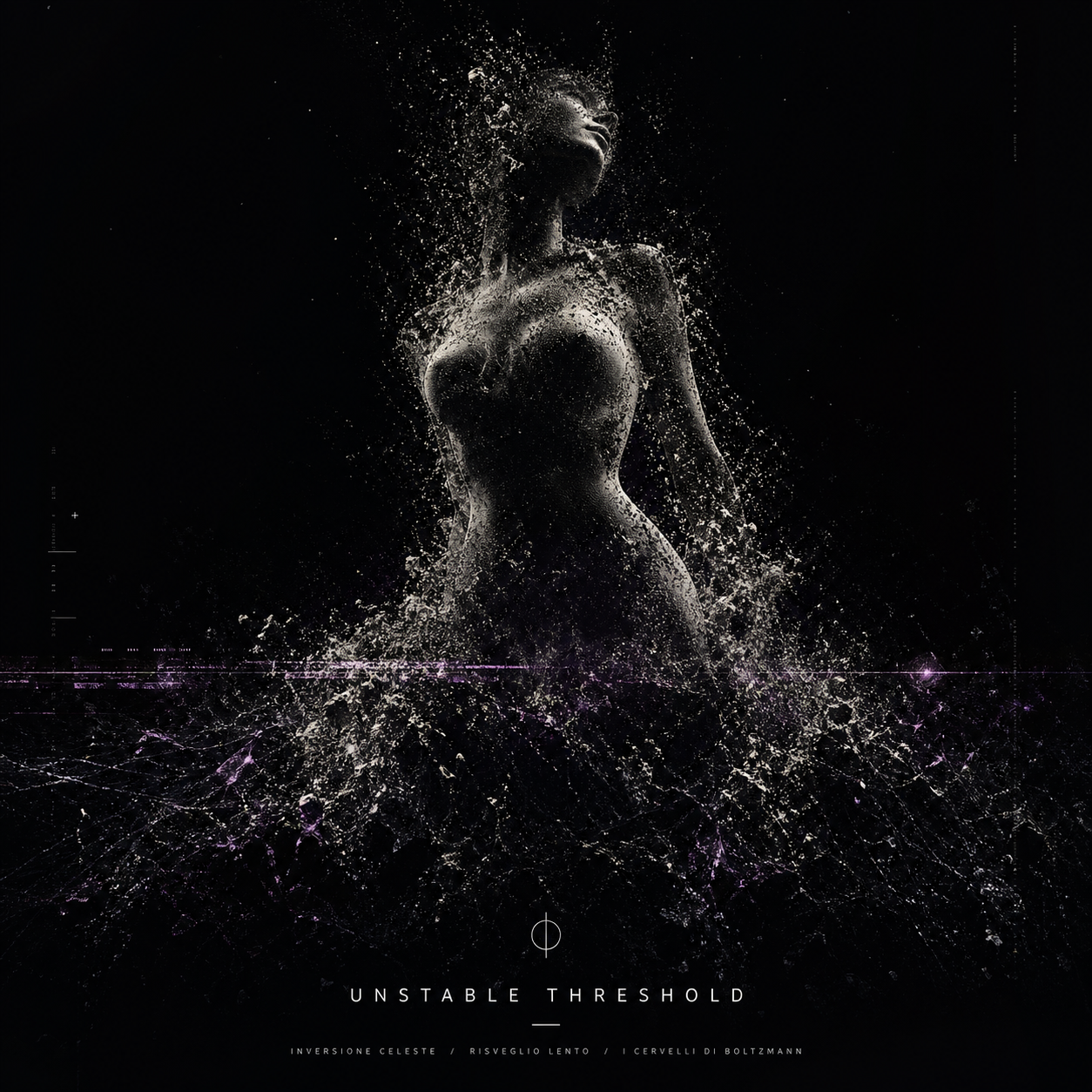
Yin and yang are not opposing forces in conflict, but two halves that contain each other. Within the white there is always a trace of black, within the black a possibility of light. This is where the transmission unfolds: three different ways of perceiving the relationship between order and chaos, between the Apollonian and the Dionysian. Inversione Celeste draws the listener into a suspended space where order seems to emerge from chaos against its own nature. Time stretches, sounds slowly recombine, and what feels stable is crossed by an underlying tension. It is a fragile balance, where the Apollonian already carries the seed of its own fracture. With Risveglio Lento, that balance starts to slip. Rhythms fragment, patterns break and reassemble unpredictably. Structure is still there, but unstable, constantly shifting — like a system trying to organize itself and failing in real time. Perception becomes irregular, almost glitch-like, where order and chaos are no longer separate states but overlapping signals. I Cervelli di Boltzmann pushes everything into saturation. Chaos erupts to the surface — distorted, dense, overwhelming. Fragments collide, accumulate, and momentarily lock into form, as if thought itself were emerging from noise. Within the intensity, a hidden structure persists, precise but unstable. The Dionysian takes over, absorbing and bending the underlying order. Three movements, three perceptions. Not a contrast, but a continuous transformation between order and chaos. -Italiano: Lo yin e lo yang non sono due opposti in conflitto, ma due forze che si contengono a vicenda. Nel bianco resta sempre una traccia di nero, nel nero una possibilità di luce. È da qui che prende forma la trasmissione: tre modi diversi di percepire la relazione tra ordine e caos, tra apollineo e dionisiaco. Inversione Celeste apre uno spazio sospeso, in cui l’ordine sembra emergere dal caos contro la sua stessa natura. Il tempo si distende, i suoni si ricompongono lentamente, e ciò che appare stabile è attraversato da una tensione sotterranea. Un equilibrio fragile, già incrinato dall’interno. Con Risveglio Lento questo equilibrio inizia a cedere. Le ritmiche si frammentano, i pattern si spezzano e si ricostruiscono in modo imprevedibile. La struttura esiste, ma è instabile, continuamente in mutazione — come un sistema che prova a organizzarsi e fallisce mentre lo fa. La percezione diventa irregolare, quasi glitchata: ordine e caos non sono più separabili, ma convivono nello stesso flusso. I Cervelli di Boltzmann porta tutto alla saturazione. Il caos esplode in superficie: distorto, denso, incontrollabile. I frammenti si accumulano, collidono, trovano per un attimo una forma, come se il pensiero emergesse direttamente dal rumore. Anche qui la struttura non scompare: resta nascosta, precisa, ma continuamente sotto pressione. Tre movimenti, tre percezioni. Non una contrapposizione, ma una trasformazione continua tra ordine e caos.